



Two Months In: Elliot Silander Has Reached Istanbul
From Sweden to Australia by bicycle, with a long road ahead and Trinordic gear being tested one night at a time.
There are roughly one billion bicycles in the world. Most of them are used for everyday things: commuting, errands, training rides, or the occasional weekend trip when the weather behaves.
In Sweden, even a short winter commute can sometimes feel like a small expedition. Cold rain, dark mornings, wet gloves, and that familiar thought: somewhere else, it must be warmer.
Maybe Australia.
But dreaming about Australia during a Swedish winter is one thing. Deciding to ride your bike all the way there is something else entirely.
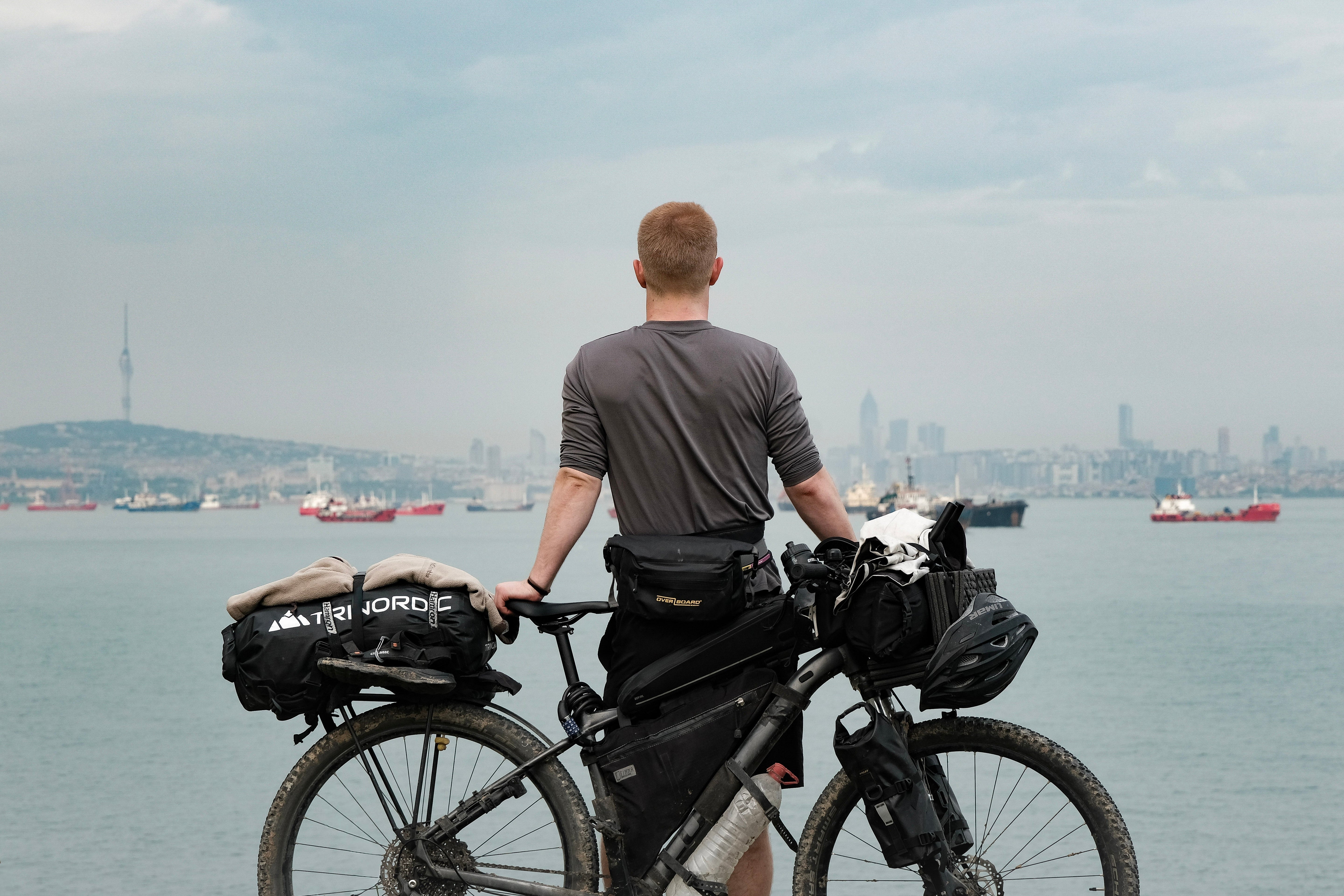
For Elliot Silander, that idea is no longer a dream. Since March 2026, he has been cycling from Sweden toward Australia, a journey of around 30,000 kilometres across Europe, Central Asia, Southeast Asia and beyond.
Two months into the expedition, we caught up with him on a video call from Istanbul. Europe was behind him. Asia was ahead. And from here, the road was starting to feel different.
Sweden to Istanbul, almost exactly as planned
When Elliot planned the first stage of the journey, the goal was fairly simple on paper: reach Istanbul in about two months.
Somehow, that is exactly what happened.
“We planned roughly two months to get down to Istanbul, and it took exactly two months,” Elliot told us. “We even had time for a small detour through Greece.”
That sounds almost suspiciously smooth for a ride across a continent. But this is still bikepacking, not a train schedule. The roads have been good, bad, muddy, fast, slow, beautiful and occasionally full of dogs. There have been punctures. There have been wrong turns. There have been days when the route choice was less about speed and more about not ending up on a massive road into Istanbul.
In Turkey, Elliot and his girlfriend Lina chose to add around 80 extra kilometres to avoid the main route into the city. That might sound like a lot, unless the alternative is an eight-lane road heading straight east. Then 80 kilometres suddenly sounds like a pretty good deal.
Most days, they rode around 100 kilometres. The longest day so far has been about 135. Through Germany and central Europe, they followed long stretches of established cycling routes, including the EuroVelo network along the Danube. Later, through Serbia, Bulgaria, Greece and Turkey, the ride became less structured and more dependent on smaller roads, local conditions and daily decisions.
That is one of the quiet lessons of a journey like this. A route can look clean on a map, but each day still has to be solved on the ground.
Where to find water. Where to eat. Where to sleep. Which road to take. Which road to avoid.
And then do it again tomorrow.
When distance starts to change shape
For most people, cycling to Istanbul from Sweden sounds like a life project on its own.
For Elliot, it is stage one.
Even he admitted that it felt strange to look back at the map and see how far he had already travelled.
“It’s the longest I’ve cycled in one go,” he said. “When you look back at the map, it is pretty crazy. It is a bit hard to understand how you suddenly just pop up in Istanbul one day.”
That sentence says a lot about long-distance travel. You do not really jump from Sweden to Turkey. You move one day at a time, one road at a time, one campsite at a time. But then, after enough mornings, enough kilometres and enough small decisions, you look up and find yourself on the edge of another continent.
Elliot has been marking each night on a map. Not just the distance, but where he slept: tent, paid accommodation, someone’s home, a stop through a cyclist-hosting platform. The result is less like a clean route line and more like a record of lived days.
A pin for each night. A small trace of where the journey actually happened.
Sleeping on the way to Australia
One of the most interesting parts of the conversation was not only where Elliot has cycled, but where he has slept.
In Sweden and Denmark, there were tents, shelters and the familiar freedom of the Nordic outdoors. In Germany, he slept in someone’s home almost every night through cyclist-hosting networks. Through parts of central Europe, it was closer to a fifty-fifty mix between camping and staying with people. Later, through Serbia, Bulgaria, Greece and Turkey, camping became the norm again.
By that stage, Elliot estimated that around 80 percent of the nights were spent camping, with the occasional apartment or indoor stay when the weather was bad, laundry was needed, or a capital city made it easier to find a host.
This rhythm says something important about bikepacking. It is not only about being self-sufficient. It is also about being open to help, people, weather and whatever the day gives you.
Some nights you sleep by a river. Some nights you sleep in a stranger’s home. Some nights you take the practical option because everything is wet and you need to wash your clothes.
Not very romantic, maybe. But very real.
When Europe starts to feel like the beginning
The first part of the journey was not easy, but it was still partly familiar territory. Denmark, Germany, Austria, the Danube, central Europe. Beautiful, but still within the kind of Europe Elliot had already seen before.
That started to shift after Budapest.
Serbia was the first new country for him on this trip. Then came Bulgaria, Greece and Turkey. By the time he reached Istanbul, the journey had started to feel different.
“I feel that now, coming to Turkey and Istanbul, it has started a bit for real,” he said.
At the same time, when we asked if anything had gone seriously wrong so far, the answer was almost no. The ride had been surprisingly smooth. Some rough roads, some traffic, a few dogs, some punctures. But nothing that had really knocked the journey off course.
That led us into a thought that will probably follow the rest of this expedition: when does a long trip become a real adventure?
Maybe not when everything goes wrong. Hopefully not. But maybe when the outcome becomes less predictable. When the plan still exists, but the road starts pushing back a little more.
From Istanbul, Elliot was heading deeper into Turkey, then toward Georgia and beyond. Central Asia was waiting further ahead. Bigger distances. More remote stretches. More water planning. More unknowns.
So Istanbul was not just a place he had reached. It was the point where the map started to feel less familiar.
Gear, tested one night at a time
For us at Trinordic, this journey is not only something we are proud to support. It is also a rare opportunity to learn.
Outdoor gear can look good in a studio. It can sound good in a product description. It can pass basic checks, weigh the right amount and pack down neatly into a bag.
But the real question is simpler:
What happens when someone actually uses it, night after night, on a long journey?
That is why Elliot’s feedback matters. Not as polished marketing language, but as real field notes.
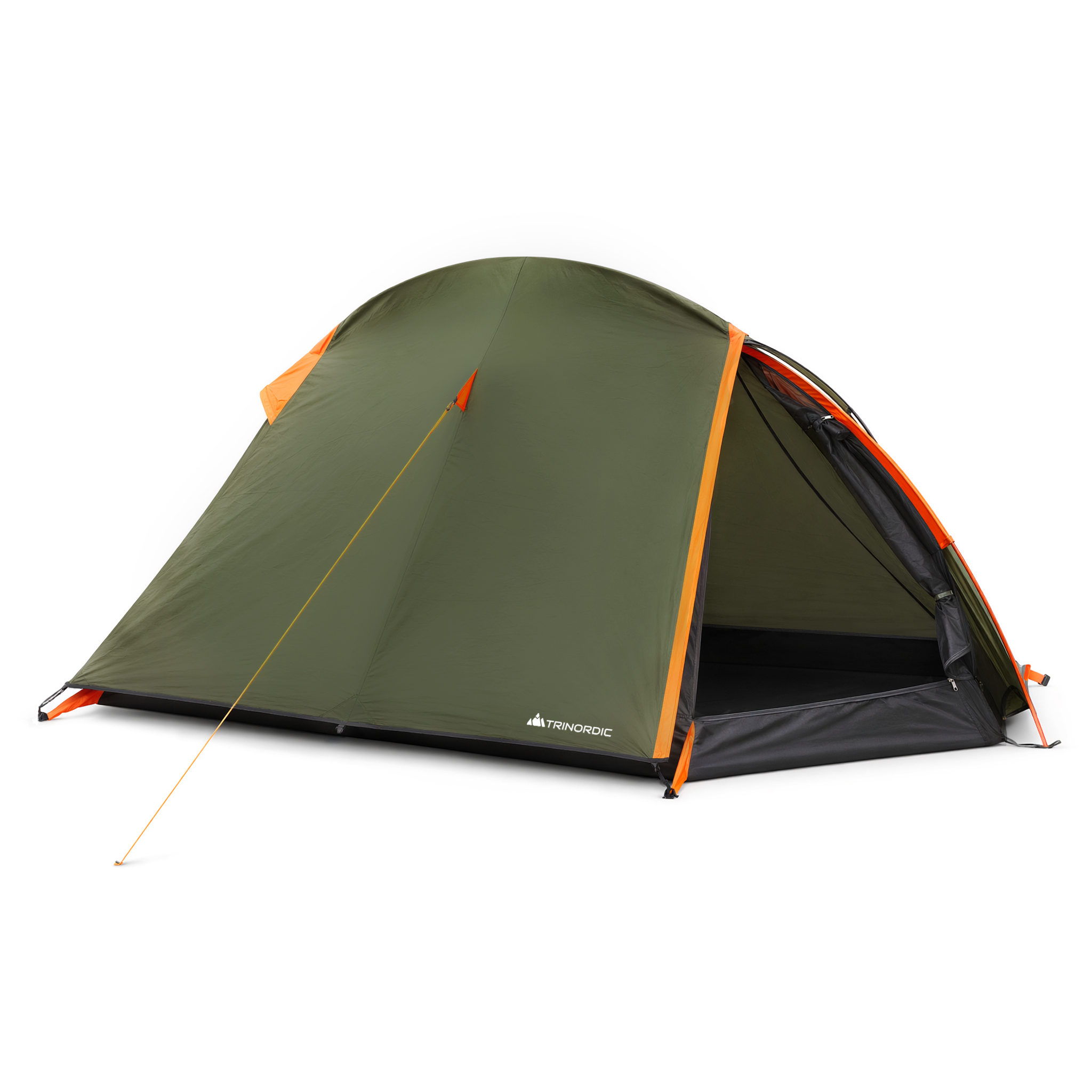
The tent has been used through rain, different campsites and long stretches of the first stage. Elliot described it as working very well so far. No leaks through the rain. No holes. The groundsheet has held up. For two people, it was tight but workable. For one person, he expects it to feel spacious.
He did mention condensation, especially when two people were sleeping close to the tent walls. That is exactly the kind of feedback we want. Not because condensation is exciting, but because this is how tents behave in the real world. Weather, ventilation, body heat, site choice and the number of people inside all matter.
A product is never tested by a specification sheet. It is tested at 6 a.m., when the outside of your sleeping bag feels damp and you are packing up for another day.
The sleeping bag liner has done what a liner should do: helped keep the sleep setup cleaner, survived washing and stayed simple. Not glamorous. Useful. That is usually a good sign.
The sleep setup has also shown something every camper eventually learns: warmth is personal. Elliot sleeps warm. Lina sleeps colder. The same night, the same gear and the same temperature can feel very different to two different people.
That is not a problem to hide. It is something to understand.
Because most people do not need the most extreme gear on the market. They need the right gear for their use, their body, their season and their comfort level.
Small failures, useful lessons
Field testing also gives you the kind of product insight you would never invent in a meeting room.
One of Elliot’s dry bags rubbed against the tyre after it had been fixed a little poorly on the rack. That created a small hole. Not ideal.
But then something funny happened: the hole made it easier to push trapped air out of the bag and compress it.
That is not how we would recommend creating a valve.
But as product feedback? Very useful.
A small detail like that can become a real design question. Should a bag like this have a simple way to release trapped air when packed tightly? Would that make it more practical for bikepacking? Would it help people compress gear faster at camp?
This is the point of supporting a journey like Elliot’s. The photos are valuable. The story is valuable. But the small practical notes may be just as valuable in the long run.
Gear improves when it is used by people who are actually tired, hungry, cold, warm, late, early, wet, dusty and trying to get moving again.
That is where the truth tends to show up.
The road ahead
After a week in Istanbul, Elliot was preparing to ride again.
The next stretch would take him through Turkey, with places like Ankara and Cappadocia on the rough plan, before continuing toward Georgia. After that, the road becomes less familiar, more remote and harder to predict.
He is now riding solo after Lina returned home. That changes the rhythm too. More freedom, perhaps. More silence. More decisions made alone.
But if the first two months have shown anything, it is that the impossible-looking journey becomes more manageable when broken down into days.
Wake up. Pack the tent. Find the road. Ride. Eat. Find water. Find somewhere to sleep.
Repeat.
Do that enough times, and Sweden becomes Germany. Germany becomes Austria. Austria becomes Serbia. Serbia becomes Greece. Greece becomes Turkey.
And one day, almost strangely, you are in Istanbul.
Still very far from Australia.
But not at the start anymore.
Why we are following Elliot
At Trinordic, we make outdoor gear for people who want to get outside with confidence, without feeling like they need equipment designed for the top of Everest.
Elliot’s journey is obviously more extreme than a weekend in the forest. Most of us are not about to ride 30,000 kilometres across continents. Fair enough.
But that is also why the journey is useful.
If a tent, liner, bag or dry bag can be used night after night on a ride from Sweden toward Australia, we learn something. Not everything. But something real.
We learn what works. We learn what could be better. We learn which features matter when you are actually out there, and which ones mostly look good on paper.
And hopefully, along the way, we also get to share a story worth following.
Because at the heart of it, this is still very simple.
A person. A bicycle. A long road east.
And somewhere far ahead, Australia.
We will keep following Elliot’s journey from here, sharing updates from the road, field notes from the gear, and the small moments that happen between the big places.
Follow along here on the Trinordic Journal, and follow Elliot’s journey on Instagram at @elliotphilip_.