



Part 2: Five Months In, Elliot Has Reached Central Asia
Around 10,000 kilometres from Sweden, Elliot had made it to Tajikistan. Behind him: Turkey, the Caucasus, the Caspian Sea and some very hot nights. Ahead: the Pamir Highway.
When we last spoke to Elliot Silander, he had just reached Istanbul.
Two months into a roughly 30,000-kilometre bicycle journey from Sweden to Australia, Europe was behind him and Asia was waiting on the other side.
Three months later, quite a lot of Asia was behind him too.
When we caught up again in early August, Elliot was in Dushanbe, the capital of Tajikistan. He estimated that he had covered around 10,000 kilometres since leaving Sweden.
About one-third of the way to Sydney.
Which sounds like considerable progress until you remember there are still around 20,000 kilometres left.
Somewhere in Turkey, the journey found its rhythm
From Istanbul, Elliot continued to Ankara and then southeast towards Cappadocia.
Turkey surprised him. He had expected the country to become dry quite quickly, but much of it was considerably greener than he imagined, particularly in the mountains.
Then, gradually, the landscape changed.
Around Cappadocia, the green gave way to dry valleys, sandstone and something much closer to desert. Elliot spent a few days there before joining a German cyclist he had met along the way for a more remote route through the mountains.
The roads became worse. The climbs became longer. At times, they were far from towns and shops, although long cycling days meant they were rarely more than about a day from somewhere to restock.
Water was often easier to solve. Mountain streams could be filtered, and drinking fountains occasionally appeared in places where you would not necessarily expect to find one.
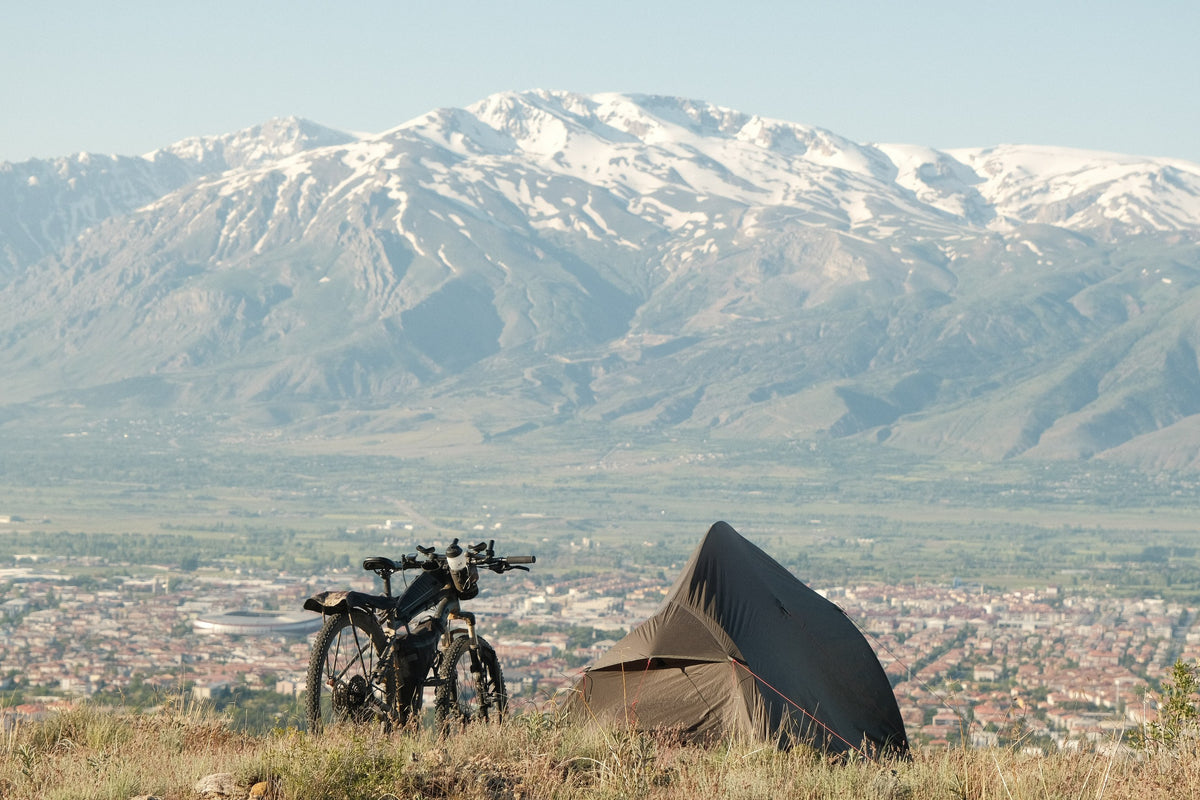
It was also around this stage that camping stopped feeling like one sleeping option among many and simply became the normal way to travel.
During the first part of the journey through Europe, Elliot had mixed camping with Warmshowers hosts, apartments and other places to stay.
Further east, the routine became simpler.
Ride. Find food. Find water. Find somewhere to camp. Sleep.
Do it again.
There are probably worse ways to simplify your life.
The kindness of strangers
One of the strongest impressions from the journey east has been the hospitality.
English became less useful. Elliot picked up some Turkish during the month he spent in the country, but plenty of conversations still relied on basic words, gestures and the international language of pointing at things.
Apparently, that gets you surprisingly far.
During one remote stretch through the Turkish mountains, Elliot was cycling with a German woman he had met in Cappadocia. Together, they reached a small village looking for somewhere to buy food.
They tried to ask whether there was a market nearby.
There was not.
The locals pointed them towards a petrol station instead.
And then sent them on their way with bread, cheese and vegetables.
It was not an isolated event.
Throughout Turkey, Elliot was regularly invited for food or tea, offered water beside the road or simply helped when he needed something. The same pattern continued further east through the Caucasus and into Central Asia.
People were often surprised when they understood what he was doing.
Sweden to Sydney.
By bicycle.
And yes, a very large part of it alone.
For a journey built around self-sufficiency, quite a lot of it seems to depend on strangers.
When the map stops cooperating
Cycling east sounds fairly straightforward.
At least geographically.
Then you reach a border you cannot cross.
By the time Elliot reached Tbilisi, he had a few options. He could fly straight to Kazakhstan. He could try to travel through Russia. Or he could fly into Azerbaijan, somehow make his way back west to the Georgian border, and then start cycling east again from where he had left off.
Naturally, he chose the most complicated one.
Together with Emilio, another cyclist heading east, Elliot flew from Tbilisi to Baku.
After a day of planning, they took a bus west to Ganja, Azerbaijan’s second-largest city. From there, they hitchhiked with a succession of vans until they were close to the Georgian border.
Then came the final part.
Around 35 kilometres by bicycle.
In the wrong direction.
The goal was to reach the exact same border crossing Elliot had already visited from the Georgian side.
Eventually, they made it.
Then they turned around.
And started cycling east again.
This time, properly.
From there, Elliot and Emilio cycled roughly 700 kilometres across Azerbaijan towards Baku, through dry plains and greener landscapes closer to the Caucasus Mountains.
The hospitality continued too. People stopped to take photos, invited them for chai and gave them more fruit than they could reasonably eat.
Eventually, they reached Baku again.
From there, another 60 kilometres south brought them to the port town of Alat.
The next obstacle was considerably harder to cycle around.
Waiting for the Caspian ferry
The ferry from Azerbaijan to Aktau in Kazakhstan is primarily a cargo route.
It also has a fairly relaxed relationship with the concept of a timetable.
Elliot and Emilio reached the terminal, bought their tickets and waited.
For around 24 hours.
Eventually, they boarded.
Then they waited another eight or nine hours in the harbour before the ferry actually left.
The crossing itself took roughly another day.
Fortunately, they had brought food.
The cabins were better than expected.
Emilio became seasick.
Elliot did not.
Eventually, Kazakhstan appeared on the other side.
Then came the heat.
When 48 degrees changes your sleep system
Central Asia introduced a very different camping problem.
For around a week, Elliot experienced temperatures in the region of 45 to 48 degrees Celsius.
At that point, staying warm at night was not exactly the priority.
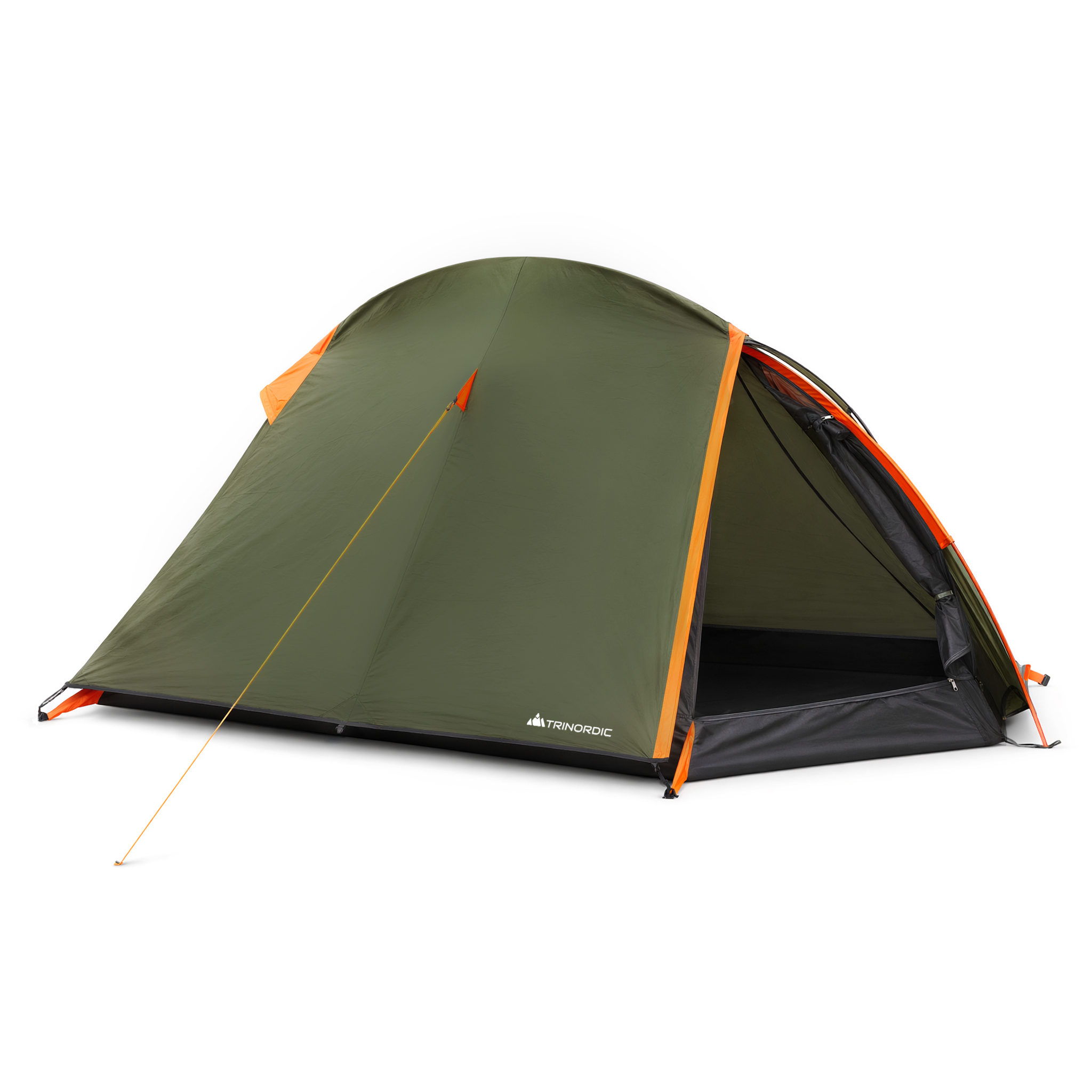
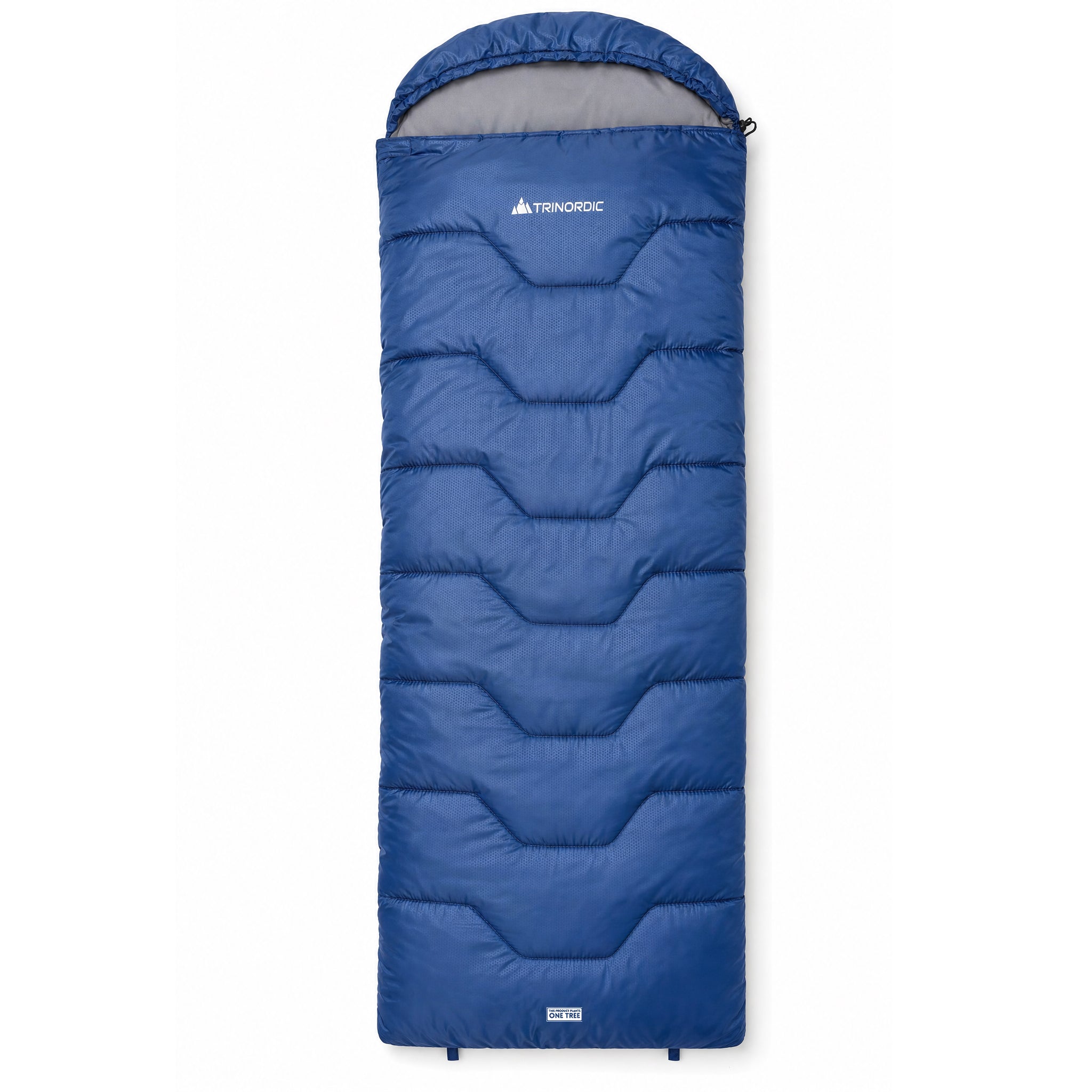
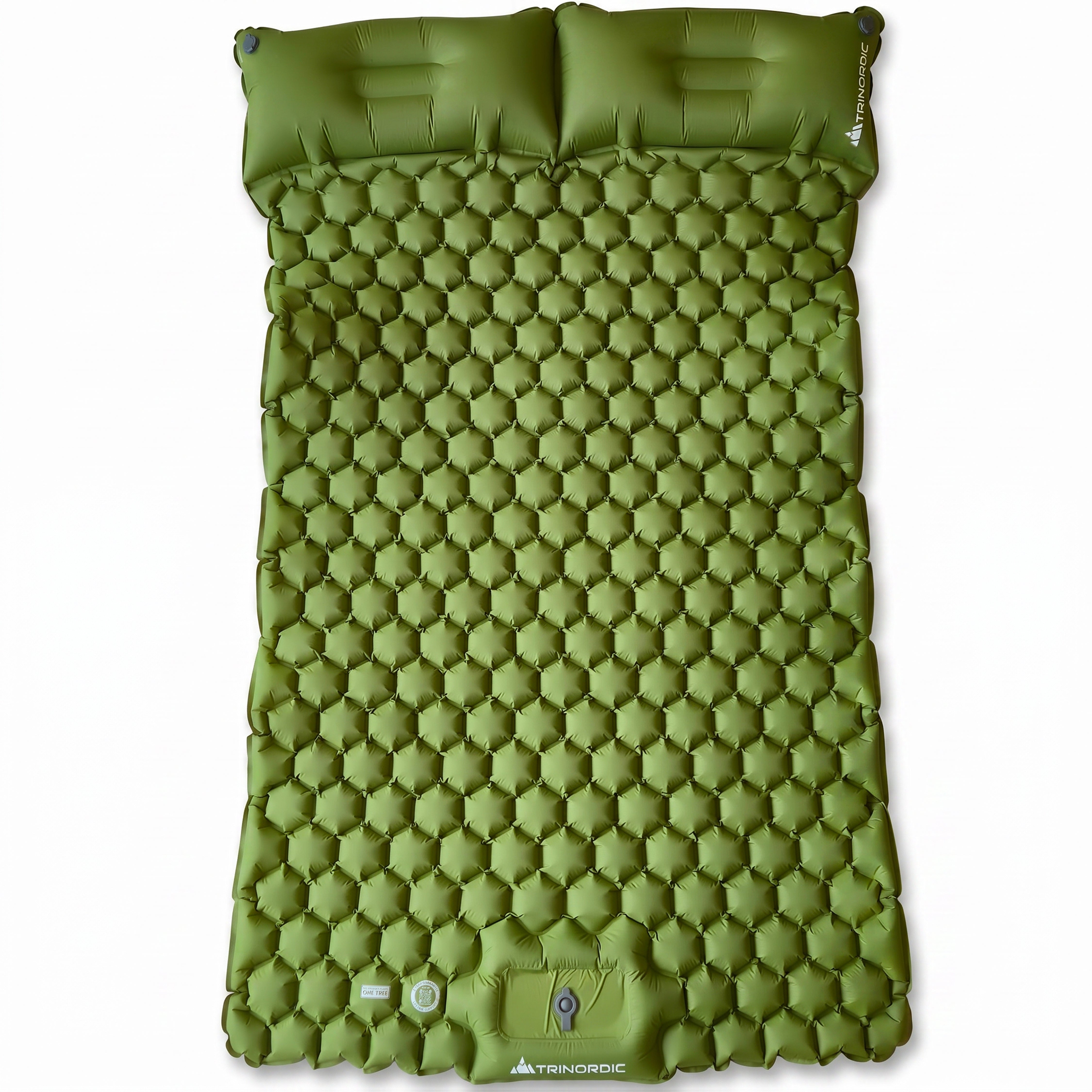
His quilt was barely needed, and neither was a high R-value sleeping pad. With almost no rain, Elliot could often remove the tent’s rainfly and let more air through.
One part of the Trinordic sleep system did get used regularly: the sleeping bag liner.
Just not quite as intended.
Instead of using it mainly as a liner, Elliot had been using it as a light blanket during the hot nights.
Sometimes the simplest piece of equipment turns out to be the useful one.
The rest of the equipment had held up well overall. One aluminium tent pole did break during the journey. Elliot was unsure whether it had been positioned incorrectly or whether there had been a fault in the pole itself.
Either way, it needed replacing.
The replacement reached him in Samarkand with his father, who also brought a new Trinordic sleeping mat for Elliot to try out.
After months apart, they got a few days together before Elliot continued towards Tajikistan.
The new mat had barely been tested when we spoke.
At close to 50 degrees, testing a warmer sleeping mat would have been somewhat beside the point.
The next stage promised rather different conditions.
Next: the Pamir Highway
When we spoke, Elliot was preparing to leave Dushanbe the following morning.
Ahead was the Pamir Highway.
His planned route towards Osh in southern Kyrgyzstan was around 1,300 kilometres and expected to take somewhere between two and three weeks.
Distance was only part of the challenge.
The route climbs through the Pamir Mountains, with the highest planned pass at roughly 4,600 metres above sea level.
For reference, that is not far below the summit of Mont Blanc.
On a bicycle.
With luggage.
The roads would become rougher, towns fewer and internet access extremely limited. Elliot had downloaded maps in advance and prepared enough battery capacity to manage long periods without charging.
Food was packed. The bicycle was prepared. He had also organised medication for the altitude.
The hostel in Dushanbe had taken on the atmosphere of a basecamp, filled with bicycles, motorcycles, hikers and travellers preparing for their own routes into the mountains.
Elliot’s own preparation had been slightly less glamorous.
He had spent part of the previous week recovering from a stomach illness.
Apparently Central Asia wanted one final contribution before he left.
The following morning, the plan was to head south into the Pamirs, eventually following the river along the Afghan border before climbing deeper into the mountains and continuing towards Kyrgyzstan.
For the next few weeks, there would be little internet, fewer towns and considerably more climbing.
And somewhere ahead, at around 4,600 metres, the new sleeping mat might finally get a more meaningful test.
If all has gone to plan, Elliot is somewhere on that road now.
We will catch up with him again further down the road to Australia.
Follow Elliot’s journey here on the Trinordic Journal and on Instagram at @elliotphilip_.